werk, bauen & wohnen edition 5–2026 «Heiter bis lustig»
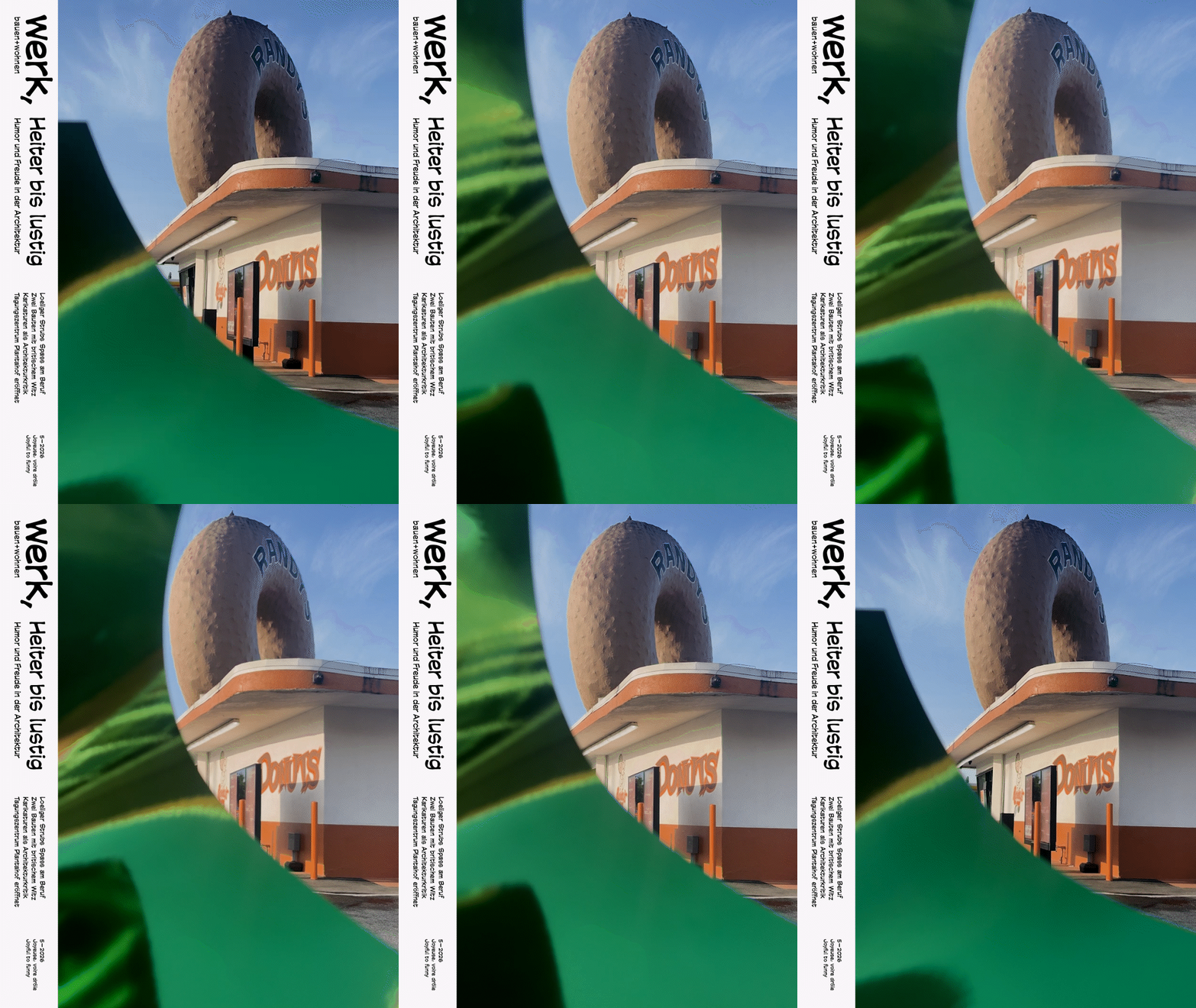
Adieu tristesse
Architects are not exactly noted for their humour. Many buildings — even those with architectural aspirations — confirm the truth of this cliché: they are monotonous, grey, and deadly serious. Why, actually? Some people cite -spiralling construction costs and demands, while others see the reason as lying in the lingering influence of the Swiss Box and Swiss Minimalism. Whatever the case, against the background of the current global situation all of us long for a moment of lightness and joy. High time, therefore, to devote an issue to the more -cheerful side of architecture. After all, laughter reduces stress and connects us, subtle irony amuses us and, without pointing an accusing finger, indicates shortcomings: in the form of a drawing or a text.
And one does not have to search so long for humour in built form, perhaps all that is needed is to look more carefully. Humour is to be found in all epochs of architectural history. Today we like to quote the little graphical roofs or the colourful stripes of postmodernism. Back then, when entire buildings took the form of everyday products or domestic animals, humour in architecture celebrated a heyday. But it can be more subtle and is often found in the details: a minor annoyance, an expectation that is not met, a surprising association not only brighten up daily life but also reveal possibilities — or even quickly solve problems, as the -research work of architect Lera Samovich from Fala atelier shows (p. 6).
Marc Loeliger and Barbara Strub regard the light-hearted moments in their profession as -essential for survival (p. 12). They enrich both the normal working day as well as the buildings themselves. Humour can even become the driving force of design. Architect Álvaro Siza showed a sense of humour and did not order the removal of the cynical graffiti “Bonjour tristesse” that was inscribed on the gable of his building at Schlesisches Tor in Berlin. Less well known, however, is the opening line of Paul Éluard’s poem, from which the phrase on the apartment building was derived. It provides the theme for this issue: Adieu tristesse.
— Jasmin Kunst