werk, bauen + wohnen 10-2026 "pouring concrete"
With New Knowledge and a Clear Conscience
The widely held opinion is that “concrete is bad. It has a catastrophic climate balance. In the -interest of sustainability, we must build without it.” The informed public that attends all the talks and panel discussions nods in complete agreement. But in the everyday world of planning the sobering reality emerges: abandoning this building material is not so simple. Whether for infrastructure buildings, earthquake-resistant construction, or for foundations in wet soil: quite often there is simply no alternative to concrete.
The concern in this issue is not to place concrete on a podium. Not at all. But we attempt not to automatically condemn it. The concrete industry is under greater pressure to produce innovations than any other branch of -industry. This is reason enough to take a closer look at it. Indeed, a number of things are already happening: recycling sorted according to ma-terial type, climate-friendly admixtures and cement-free binders are on the way. Improved standards allow for new mixes but also place responsibility on concrete structures and planners (p. 6). This is a good thing. To architects with a guilty conscience, we say: even when building with concrete there are several things we can do right.
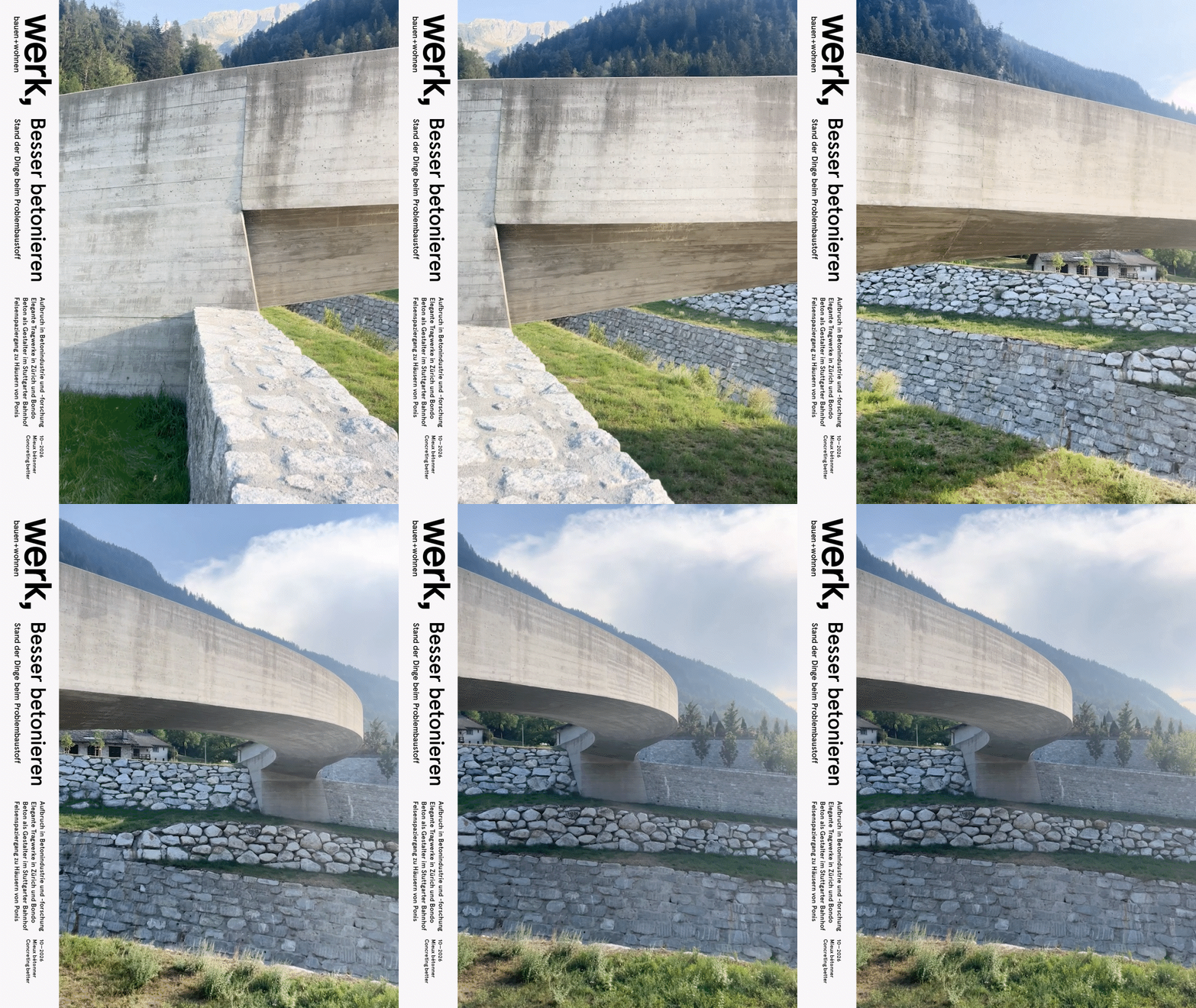
The projects presented aim to show how this can be done. In the structure of the Alto Tower concrete was used in a carefully considered way: economical, efficient and with a climate balance comparable to that of a hybrid construction (p. 13). In Copenhagen prestressed concrete beams were not crushed but were -re--used at the same location and for a similar function (p. 30). Following the disastrous rockslide in Bondo in 2017, new protective structures have recently been completed (p. 20). Only concrete with its specific properties can deal with the forces of nature at this scale — and look good in the process. Given the urgency of the environmental questions the aesthetics of this “liquid stone” often tend to take a backseat. To remedy this, we show pictures of the shell of the railway project Stuttgart 21. Initially much criticized, the project is developing a spatial elegance that can only be achieved with concrete. Hopefully, in the future these qualities can be used in a more considered way that will soon -allow us to look at them admiringly — and with a clear conscience. — Christoph Ramisch